
Core element 4: Action
Adapted from the CDC. Page last reviewed: December 13, 2022
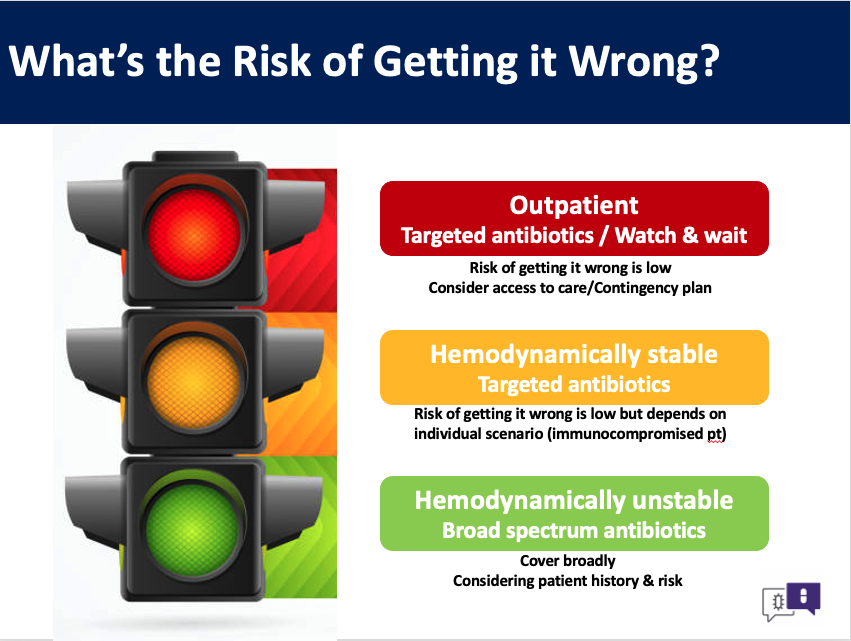
Antibiotic stewardship interventions improve patient outcomes. An initial assessment of antibiotic prescribing can help identify potential targets for interventions. Additionally, published evidence has demonstrated that prospective audit and feedback and preauthorization are the two most effective antibiotic stewardship interventions in hospitals. See below for additional stewardship interventions to target and tailor to your facility.
Examples of priority interventions to improve antibiotic use
- Prospective audit and feedback: external review of antibiotic therapy by an expert in antibiotic use, accompanied by suggestions to optimize use, at some point after the agent has been prescribed.
- Preauthorization: prescribers to gain approval prior to the use of certain antibiotics. This can help optimize initial empiric therapy because it allows for expert input on antibiotic selection and dosing.
- Facility specific treatment guidelines: considered a priority because they can greatly enhance the effectiveness of both prospective audit and feedback and preauthorization by establishing clear recommendations for antibiotic use in the hospital. Recommendations may be based on national guidelines but should reflect hospital treatment preferences based on local susceptibilities, formulary options, patient populations, and resources.
Examples of common infection-based interventions
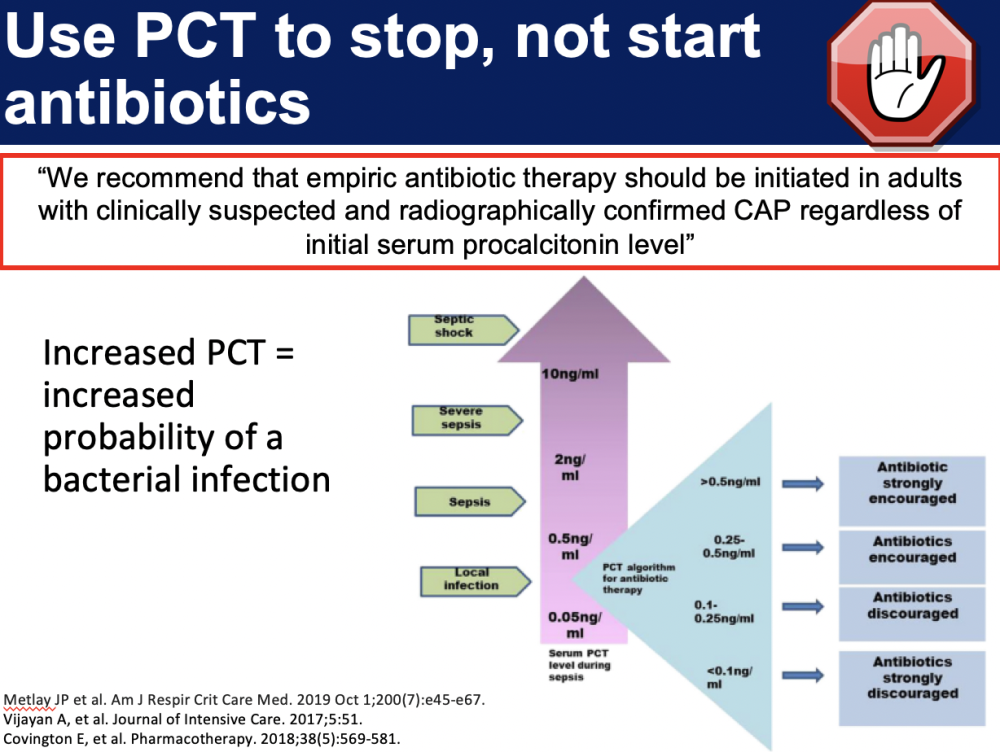
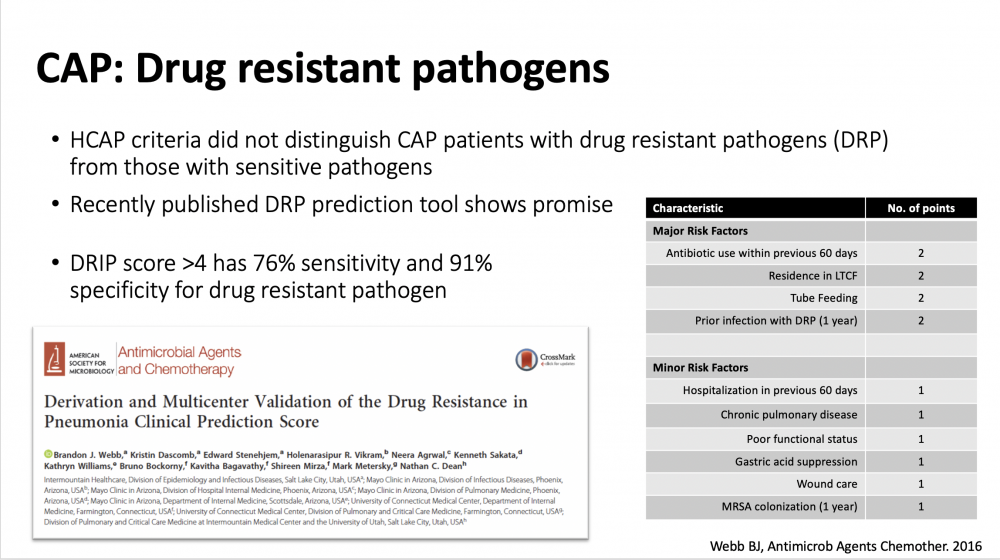
- Community-acquired pneumonia: improving diagnostic accuracy, tailoring therapy to culture results, optimize duration of therapy to ensure compliance with guidelines
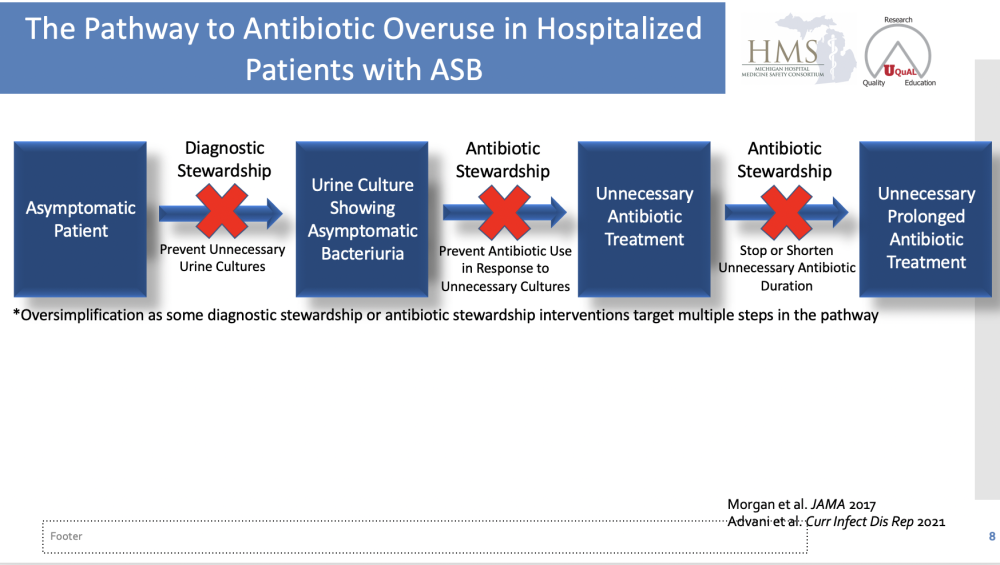
- Urinary tract infection: avoiding obtaining unnecessary urine culture, avoiding treatment of patients who are asymptomatic (unless there is a specific reason to treat), optimize therapy based on local susceptibilities, and shorten duration of therapy.
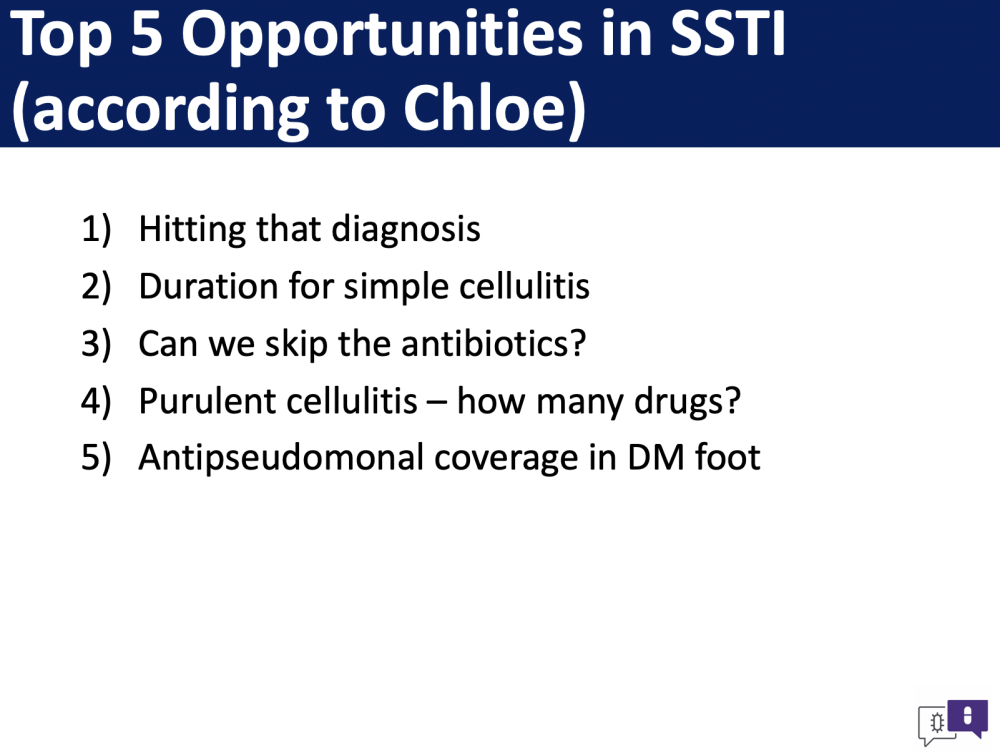
- Skin and soft tissue infection: avoid unnecessary broad-spectrum agents (Ex. Coverage of MRSA and gram-negative pathogens if not needed), prescribing of correct dose, dosage, and duration of treatment.
- Additional infection-based interventions: sepsis, Staphylococcus aureus infection, C. difficile infection, culture proven invasive infection, outpatient parenteral antibiotic therapy (OPAT).
Presentations